Author’s Note: This post includes discussions of sexual assault.
The Columbia International Relations Council and Association (CIRCA) is one of the largest student organizations at Columbia. Not only do they publish the undergraduate political and travel magazines, and organize their own international politics speaker series for undergraduates, they run Columbia’s Model UN offerings, which engage with high schools and colleges throughout the world. I once volunteered at a conference, and submitted pitches to the Political Review, but didn’t get involved beyond that.
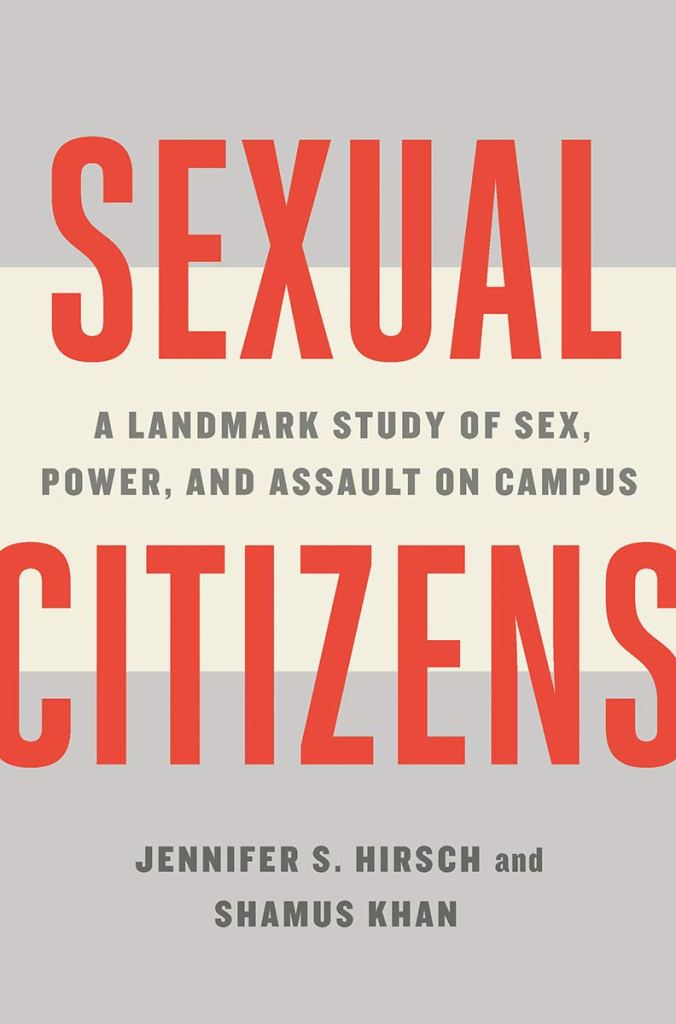
I’m thinking about them because this month, recent graduates of Columbia have been coming out with their stories of sexual assault, starting from Sarah Lu’s piece about a fraternity member, and expanding to include non-Greek organizations like CIRCA. In re-reading Sexual Citizens, a book based on sociological data gathered on Columbia students, I saw that “peer groups of all kinds — both peer networks and formal student organizations — play a more general role in producing and interpreting campus sexual assault.” And I think it’s important in this conversation to contextualize what that quote means and how it explains (but can’t justify) how we as a student body got here.
While I can’t get into everything about the recent scandal with Columbia’s chapter of Phi Gamma Delta (commonly FIJI), for our purposes it’s important to note that one of the main selling points of fraternities is building a network of peers for both community and, later on, job opportunities. This motivation may drive one of the darker impulses of fraternities because students, in general, work “to maintain the view of their group as an upstanding, valuable, moral community, and of themselves and those around them as good people.” To quote from Sexual Citizens again, “the consequence was — inadvertent in our view — protecting people who had committed assault.”
I want to emphasize here that closeness itself isn’t the problem. Catherine Zhu said it best writing about the Columbia Debate Society last Sunday, which largely participates in parliamentary debate in the college circuit. She writes that “in its most benevolent form, the tight-knit nature of the club just meant some light favoritism. In its worst form, it served to decrease accountability, disincentivize change, and protect problematic people.” Zhu goes on to describe how the Debate Society saw allegations of sexual assault as things that could scare away novices and bring the boot of the administration their necks.
Returning to Sexual Citizens and fraternities for a minute, the book takes some length not to condemn all of Greek life, nothing that their approach is somewhat of a departure from analyzing fraternities as sites of institutionalized toxic masculinity. What it does say is that some fraternities were “actively involved in intentionally trying to remake masculinity, while others seem primarily focused on managing liability.” It’s the latter type that tend to close ranks and cover up to maintain that coveted status of respect, or at least in Greek life to avoid a “rapey” reputation. Conversely, this situation gives power to those who least deserve it, as such developing a “rapey” environment. As Sarah Lu elegantly described in their essay, “rapists do not have the power they do simply as individuals. The power they hold comes from the community, from the people who continue to prop them up and support them regardless of what they know.”
By 2017, students at Columbia would have undergone pre-orientation and orientation bystander training, and some student leaders are obligated under New York law to go through training addressing sexual misconduct. In many ways, Sexual Citizens found that “sometimes students interpret the bystander approach to mean that they should keep an eye out for “predators,” when in fact they would be better served by looking at their friends.” This problem extends to the aftermath of sexual assaults: when students choose to manage their friends’ reputations first and address wrongs second, they directly undermine efforts to hold people accountable and enforce a hostile environment for survivors on campus.
This gets us to CIRCA, which is a little complicated. In the spring of 2017, a sexual assault occurred within the CIRCA peer group. While in partial credit, the organization did address an allegation brought to its attention in 2017, it was brought to their knowledge without the consent of the survivor. To be fair, Columbia’s formal policy is that “student group leaders cannot retaliate against any person within [their] group, and retaliation would be any action taken in issues of misconduct.” Formal action from a student group requires a conversation with a governing board or the administration, even though those same student leaders are likely aware of how many survivors statistically don’t want to spend months in administrative meetings for nothing to happen. In 2018, however, members of CIRCA’s leadership chose to ask whether the survivor from the incident whether she would be comfortable with the assaulter running for one of the executive board decisions, as he was being considered. The uncomfortable impact of these decisions and the survivor’s repeated advocacy led to CIRCA passing a series of constitutional amendments driven to give students the “right to seek recourse against an accused member of CIRCA before the Executive Board,” a policy Columbia vetoed in following years.
This interaction could be interpreted as a compelling reason not to let students get too involved. After all, these students violated someone’s privacy to learn about an assault and continued to consider promoting them regardless. However, in that debate, it’s important to note that students are already on the frontline of these questions. According to the survey which Sexual Citizens is based on, “81% of students who experienced ‘sexual contact without their consent or agreement,’ regardless of whether or not they thought of it as assault, talked to their friends about what happened.” This poses a community burden of interpreting assault that students, and at times student organizations, find themselves addressing while constrained by Columbia. There are, however, ad hoc ways to tackle these problems — whisper networks and situational discretion amongst them — that are still available to these organizations. Groups like Columbia Debate Society and Columbia’s chapter of FIJI stand accused of not developing or using those options.
As of now, CIRCA now has an anonymous feedback form, and in recent history “personal statements submitted to the Executive Board were taken very seriously, and eventually led to the removal of a board member.” Meanwhile, in the aftermath of Catherine Zhu’s essay, people began to resign from the debate society. After all, she did write that “there is no reason for a club whose culture directly fosters this culture of harassment, assault, and inequity to exist.” I’m concerned that this can describe many student organizations, not just at Columbia, not exclusively in the Greek space. And if I’m correct, then in a country that Tocqueville described as a nation of a thousand associations, we may be repeatedly producing unsafe ones, not just in college but in all stages of life. If we are going to move beyond this national moment of reckoning, we have to learn this basic lesson: that friendship cannot be an excuse for wrongdoing, nor a license for silence.
I reached out to the Columbia Debate Society and CIRCA through email. CIRCA told me that the systems they developed in 2018 were vetoed by the University, and the administration has asked CIRCA to pause internal actions so that they can finish their own investigations. Columbia Debate Society did not get back to me.
6/30/2020: Updated to include a content warning
Categories: Uncategorized

 This is Ufon Umanah,
Leave a comment